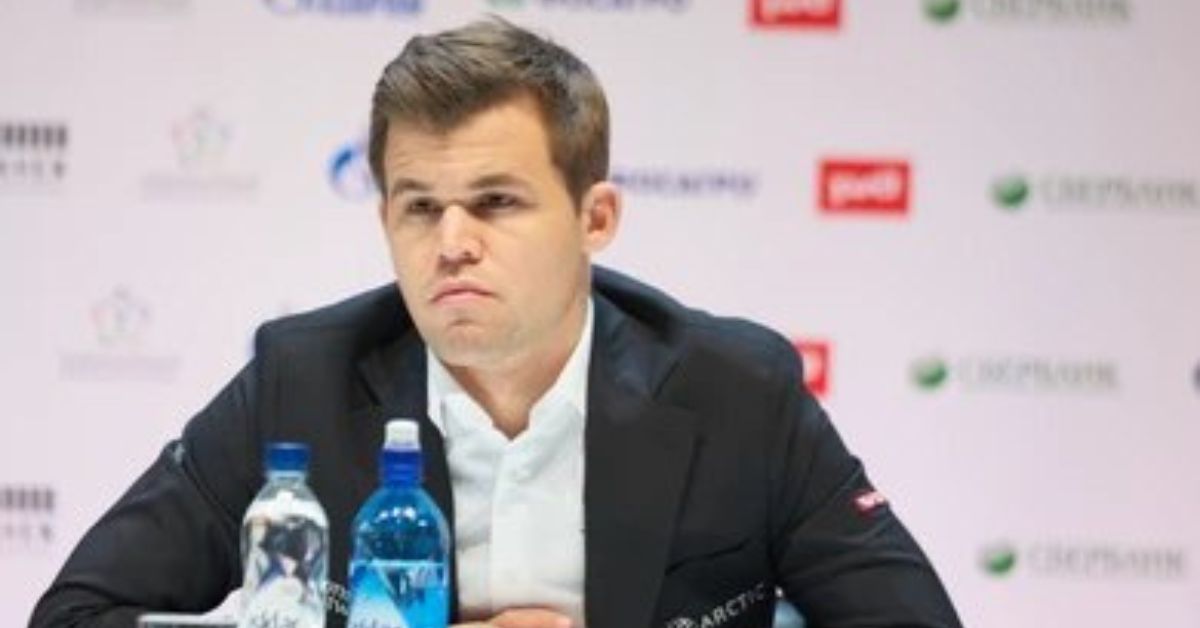
On August 1, 2025, Norwegian chess grandmaster Magnus Carlsen emerged victorious at the inaugural Esports World Cup chess tournament held in Riyadh, Saudi Arabia. Representing Team Liquid, Carlsen defeated French grandmaster Alireza Firouzja in the Grand Final, securing the top prize of $250,000 from a $1.5 million prize pool. The event, marking chess’s debut at the prestigious multi-discipline esports competition, showcased the game’s growing prominence in the digital age. This article details Carlsen’s journey to the title, the tournament’s structure, and its broader significance for chess and esports.
A Milestone for Chess in Esports
The 2025 Esports World Cup, hosted in Riyadh, introduced chess as a competitive discipline for the first time, a move that sparked both excitement and debate within the chess community. Organized in partnership with Chess.com, the tournament featured a $1.5 million prize pool, one of the largest in chess history, and attracted 16 of the world’s top players. According to BBC News, the inclusion of chess alongside mainstream esports titles like Call of Duty and League of Legends highlighted its growing appeal as a digital competitive sport.
The event, held from July 29 to August 1, 2025, utilized a fast-paced 10-minute no-increment time control, aligning with the high-energy format of esports. Carlsen, the world’s top-ranked player and a five-time World Chess Champion, leveraged his expertise in rapid and blitz formats to dominate the competition, reinforcing his reputation as a versatile and formidable competitor.
Tournament Structure and Qualification
The Esports World Cup chess tournament adopted a double-elimination format, dividing 16 players into four groups. Each group’s upper bracket winner advanced directly to the quarterfinals, while others competed in a losers’ bracket for additional qualifying spots. Matches consisted of rapid games with a 10+0 time control, and ties were resolved through bidding armageddon games, where players bid for less time to play with Black, needing only a draw to win.
Qualification for the event was highly competitive. Twelve players, including Carlsen, Hikaru Nakamura, and Alireza Firouzja, earned invitations through the 2025 Champions Chess Tour, while four others—Nihal Sarin, Javokhir Sindarov, Anish Giri, and Levon Aronian qualified via a Last Chance Qualifier held in Riyadh from July 24 to 26, as reported by ChessBase. The tournament’s structure ensured intense competition, with only the strongest advancing to the knockout stages.
Carlsen’s Path to the Title
Carlsen, representing Team Liquid, began his campaign in Group D, securing a 1½–½ victory over Nodirbek Abdusattorov of Natus Vincere. He followed with another 1½–½ win against Jan-Krzysztof Duda of Twisted Minds, advancing to the quarterfinals. In the quarterfinals, Carlsen defeated Indian grandmaster Nihal Sarin 2½–½, showcasing his strategic depth and clock management, according to Chess.com.
The semifinals pitted Carlsen against world number two Hikaru Nakamura of Team Falcons in a highly anticipated best-of-six match. The contest was a rollercoaster, with Carlsen taking an early lead, only for Nakamura to level the score by trapping Carlsen’s queen in a King’s Indian Defense. After a series of draws and blunders, the match went to armageddon, where Carlsen’s 10-minute bid outlasted Nakamura’s 6-minute-12-second bid, securing a 4–3 victory. Carlsen later admitted to CNN that he was “so nervous” during the armageddon game, highlighting the match’s intensity.
In the Grand Final, Carlsen faced Alireza Firouzja of Team Falcons in a best-of-three-sets match. Carlsen dominated the first set with a 3–1 score, winning one game and drawing two. In the second set, Firouzja scored a win after Carlsen blundered a rook, but Carlsen regained control, capitalizing on Firouzja’s weak opening to secure another 3–1 set victory, clinching the title with an overall score of four wins, two draws, and one loss, as reported by Sportstar.
Notable Performances and Results
Other players also made significant impacts during the tournament:
- Alireza Firouzja: Advanced to the Grand Final after a 4–1 semifinal win over Arjun Erigaisi, earning second place and $150,000.
- Hikaru Nakamura: Secured third place with a 3½–2½ victory over Arjun Erigaisi in the third-place playoff, taking home $145,000.
- Arjun Erigaisi: Finished fourth after a strong run, including wins over Nihal Sarin, but fell to Nakamura in a closely contested playoff, earning $115,000.
- Levon Aronian: Reached the quarterfinals alongside Carlsen, Firouzja, and Erigaisi, showcasing his consistency in rapid formats.
The tournament’s fast-paced format led to several upsets, with time scrambles and blunders shaping outcomes, as noted by Chess.com. Players like Fabiano Caruana and Anish Giri were eliminated earlier than expected, highlighting the unpredictability of the 10+0 time control.
Controversy Surrounding Chess’s Inclusion
The inclusion of chess in the Esports World Cup sparked debate within the chess community. Critics, as reported by Firstpost, argued that chess, a traditional board game, does not fit the esports mold, despite its digital format on platforms like Chess.com. Others raised concerns about Saudi Arabia’s role as host, citing allegations of sportswashing due to the event’s funding by the Public Investment Fund. Carlsen’s role as the tournament’s global ambassador, announced in December 2024, also drew scrutiny, with some comparing it to high-profile endorsements in other sports, according to The Guardian. Despite these controversies, the event’s organizers emphasized chess’s global appeal and digital evolution as justification for its inclusion.
Significance for Chess and Esports
The Esports World Cup marked a historic moment for chess, integrating it into a major esports platform with a $70 million overall prize pool across 25 games. The event, held at Boulevard City in Riyadh, attracted a global audience, with matches streamed live on platforms like Chess.com and chess24. Carlsen’s victory, coupled with his ambassador role, underscores chess’s growing relevance in the digital age, where online platforms have expanded its reach to millions, as noted by CNN. The tournament’s success could pave the way for further integration of chess into esports, potentially reshaping how the game is perceived and played.
Carlsen’s Legacy and Future Outlook
Carlsen’s win adds to his illustrious career, which includes five World Chess Championships, five World Rapid Championships, and eight World Blitz Championships. His ability to adapt to the fast-paced 10+0 format, combined with his strategic prowess, solidified his dominance, as highlighted by ChessBase. Posts on X celebrated Carlsen’s performance, noting his high accuracy and tournament performance rating of 2865, reinforcing his status as a chess legend.
Looking ahead, the Esports World Cup’s chess tournament could become a recurring event, with Carlsen expressing hope for a “bigger stage” in future editions, per BBC News. The event’s success may encourage more top players to embrace digital formats, further bridging the gap between traditional chess and esports.
Economic and Cultural Impact
The tournament’s $1.5 million prize pool, with $250,000 for the winner, highlights the growing financial incentives in competitive chess. Carlsen’s victory also boosted Team Liquid’s standing in the overall Esports World Cup rankings, as reported by Reuters. Culturally, the event showcased chess’s ability to attract a younger, digital audience, aligning with the global rise of online chess platforms, fueled by shows like The Queen’s Gambit and streaming by players like Nakamura.
Conclusion
On August 1, 2025, Magnus Carlsen won the inaugural Esports World Cup chess tournament in Riyadh, defeating Alireza Firouzja in the Grand Final to claim $250,000. Representing Team Liquid, Carlsen navigated a double-elimination format, overcoming Hikaru Nakamura in a dramatic semifinal and securing victory with two 3–1 set wins. The $1.5 million event, featuring a 10+0 time control, marked chess’s debut at the Esports World Cup, despite controversies over its inclusion and Saudi Arabia’s hosting. Hikaru Nakamura took third place, while Arjun Erigaisi finished fourth. The tournament highlights chess’s growing digital presence and its potential as a cornerstone of esports.
Sources & References:
- BBC News
- ChessBase
- Chess.com
- Reuters
- The Guardian
- Firstpost
- CNN
- Sportstar