DJI Osmo 360 Elevates 360-Degree Camera Technology in 2025
On July 31, 2025, DJI, a global leader in drone and camera technology, launched the Osmo 360, its first foray into the 360-degree camera market. This innovative device introduces advanced features, including native 8K video at 50fps, a 1-inch square HDR sensor, and robust stabilization, positioning it as a strong competitor to established players like Insta360 and GoPro. With its compact design and seamless integration with DJI’s ecosystem, the Osmo 360 is designed for content creators, vloggers, and adventure enthusiasts seeking high-quality immersive footage. This article explores the camera’s specifications, features, and its impact on the 360-degree camera industry.
A New Player in the 360-Degree Camera Market
DJI, renowned for its drones and action cameras, has entered the competitive 360-degree camera space with the Osmo 360. Announced on July 31, 2025, the camera aims to challenge industry leaders like the Insta360 X5 and GoPro Max. According to TechRadar, the Osmo 360 combines cutting-edge imaging technology with DJI’s signature stabilization and user-friendly software, making it a compelling option for creators. Its launch follows months of speculation and leaks, which highlighted its potential to set new standards in panoramic video and photography.
The camera’s debut comes at a time when 360-degree cameras are gaining popularity for their ability to capture immersive, all-angle footage, ideal for virtual reality (VR), vlogging, and action sports. The Osmo 360’s advanced specifications and competitive pricing position it as a significant contender in this growing market.
Key Features and Specifications
The DJI Osmo 360 is packed with features that cater to both professional and amateur creators. Its standout specifications include:
- Native 8K Video: Records 360-degree video at up to 8K resolution at 50fps, surpassing the Insta360 X5’s 8K 30fps capability.
- 1-Inch Square Sensors: Dual 1/1.1-inch CMOS sensors with a square design maximize light capture, improving image quality and low-light performance.
- 120MP Stills: Captures high-resolution 360-degree photos at 120MP, compared to the X5’s 72MP, offering greater detail for post-processing.
- 10-Bit D-Log M: Supports 10-bit color depth for enhanced dynamic range, ideal for professional color grading.
- Long Battery Life: Offers up to 100 minutes of continuous 8K 30fps recording, extendable to 180 minutes with an optional Battery Extension Rod.
- Built-In Storage: Includes 105GB of internal storage, plus support for up to 1TB microSD cards.
- Advanced Stabilization: Features HorizonSteady and RockSteady modes for smooth footage, even during dynamic movements.
These specifications, as reported by Digital Camera World, make the Osmo 360 a versatile tool for capturing high-quality video and stills in diverse environments.
Design and Build Quality
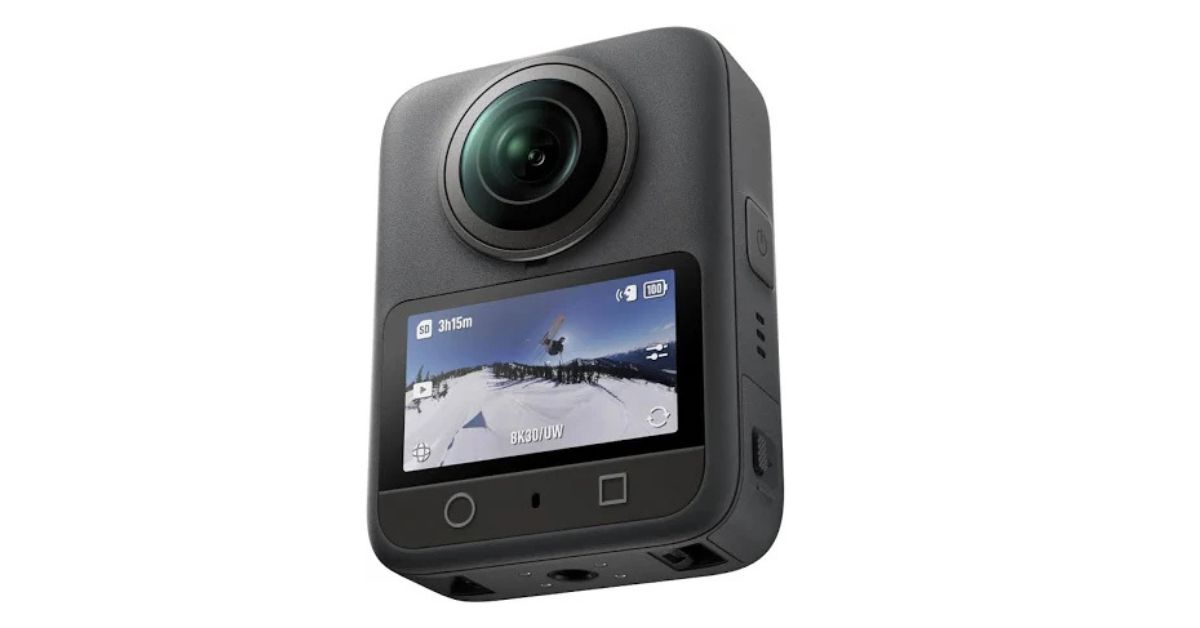
The Osmo 360 features a compact, square-bodied design, weighing 183 grams, making it approximately 10% lighter than the Insta360 X5, according to DroneXL. Its dimensions (80 x 60 x 35mm) ensure portability, while an IP68 rating provides durability against dust and water, though DJI advises against underwater use due to potential stitching issues. The camera includes a 2-inch OLED touchscreen, intuitive three-button controls, and a magnetic quick-release mount compatible with DJI’s action camera accessories.
Dual fisheye lenses, each with an f/1.9 aperture and over 180-degree field of view, enable seamless 360-degree capture. While the lenses are not replaceable, unlike the Insta360 X5, DJI offers optional protective covers to enhance durability. The camera also supports direct connection to DJI’s Mic 2 system, allowing high-quality audio recording without a separate receiver, a feature praised by reviewers on X.
Performance and Image Quality
The Osmo 360’s 1-inch square HDR sensors are a key differentiator, utilizing 25% more sensor area than the rectangular sensors found in competitors like the Insta360 X5, as noted by Engadget. This design enhances image quality, particularly in low-light conditions, with larger 2.4μm pixels improving detail in shadows and highlights. The camera’s 13.5 stops of dynamic range and 10-bit D-Log M recording provide creators with greater flexibility in post-production, making it suitable for cinematic projects.
In video mode, the Osmo 360 supports 8K 50fps for 360-degree footage and 4K 120fps in single-lens Boost Video mode with a 170-degree field of view. Reviewers, including those at CineD, have highlighted its superior low-light performance compared to the X5, with SuperNight mode delivering clearer footage in dark environments. For still photography, the camera captures 120MP panoramic images or 12-30MP HDR stills, offering options for both high-resolution and dynamic range-focused shots.
Software and Editing Capabilities
The Osmo 360 integrates with DJI’s Mimo mobile app and DJI Studio desktop software, streamlining the editing process for 360-degree content. The Mimo app allows users to create timelines, adjust viewpoints, and export videos for social media, making it accessible for beginners, according to Amateur Photographer. DJI Studio, available for Mac and PC, offers advanced tools like Key Frame editing and motion control via GyroFrame, enabling creators to reframe footage with precision.
The camera also supports intelligent tracking, locking onto subjects like people or vehicles, which simplifies editing for dynamic shots. While the software is robust, some reviewers, as noted on X, suggest that the Mimo app requires refinement to match the polish of Insta360’s editing suite.
Pricing and Availability
The Osmo 360 is available in two bundles. The Standard Combo, priced at €479.99 in Europe and AU$759 in Australia, includes the camera, a battery, a protective pouch, and a USB-C cable. The Adventure Combo, at €629.99 or AU$989, adds a selfie stick, battery case, and quick-release mount. U.S. pricing starts at $549.99 for the Standard Combo and $699.99 for the Adventure Combo, though availability in the U.S. is pending, per The Verge. These prices position the Osmo 360 as a cost-competitive alternative to the Insta360 X5, which retails at similar or higher rates.
Competitive Landscape
The 360-degree camera market is highly competitive, with Insta360’s X5 and GoPro’s Max as key rivals. The Osmo 360 outperforms the X5 in video frame rates (8K 50fps vs. 30fps) and still resolution (120MP vs. 72MP), while its square sensor design enhances low-light performance. However, the X5 offers replaceable lenses, a feature absent in the Osmo 360, which may appeal to adventure users, according to TechRadar. The GoPro Max, considered outdated by some reviewers, lags in resolution and sensor size, making the Osmo 360 a stronger contender.
DJI’s ecosystem integration, including compatibility with its wireless mics and mounts, gives it an edge for users already invested in DJI products. The camera’s launch coincides with Insta360’s X5 release in April 2025, intensifying competition, as reported by Loyalty Drones.
Challenges and Limitations
Despite its strengths, the Osmo 360 faces challenges. Its fixed lenses limit repair options compared to the X5, and DJI’s recommendation against underwater use may deter some users. The editing software, while powerful, has been criticized for needing further optimization. Additionally, the lack of U.S. availability at launch has frustrated some consumers, with no clear timeline provided by DJI. These factors could impact its adoption in certain markets.
Future Implications
The Osmo 360’s entry into the 360-degree camera market signals DJI’s ambition to expand beyond drones and action cameras. Its advanced features and competitive pricing could shift market dynamics, challenging Insta360’s dominance. As 360-degree content grows in popularity for VR, vlogging, and immersive storytelling, the Osmo 360 is well-positioned to capture a significant share of the market. Future firmware updates and expanded U.S. availability may further enhance its appeal.
Conclusion
The DJI Osmo 360, launched on July 31, 2025, introduces advanced features to the 360-degree camera market, including 8K 50fps video, 1-inch square HDR sensors, and 120MP stills. With a compact design, 105GB of internal storage, and integration with DJI’s ecosystem, it competes strongly with the Insta360 X5 and GoPro Max. Priced at €479.99 for the Standard Combo and €629.99 for the Adventure Combo, it offers a cost-effective option, though U.S. availability remains pending. While fixed lenses and software refinement are limitations, the camera’s superior image quality and stabilization make it a compelling choice for creators.
Sources & References:
- TechRadar
- The Verge
- Digital Camera World
- Amateur Photographer
- Engadget
- DroneXL
- CineD
- The Financial Times
- Loyalty Drones